
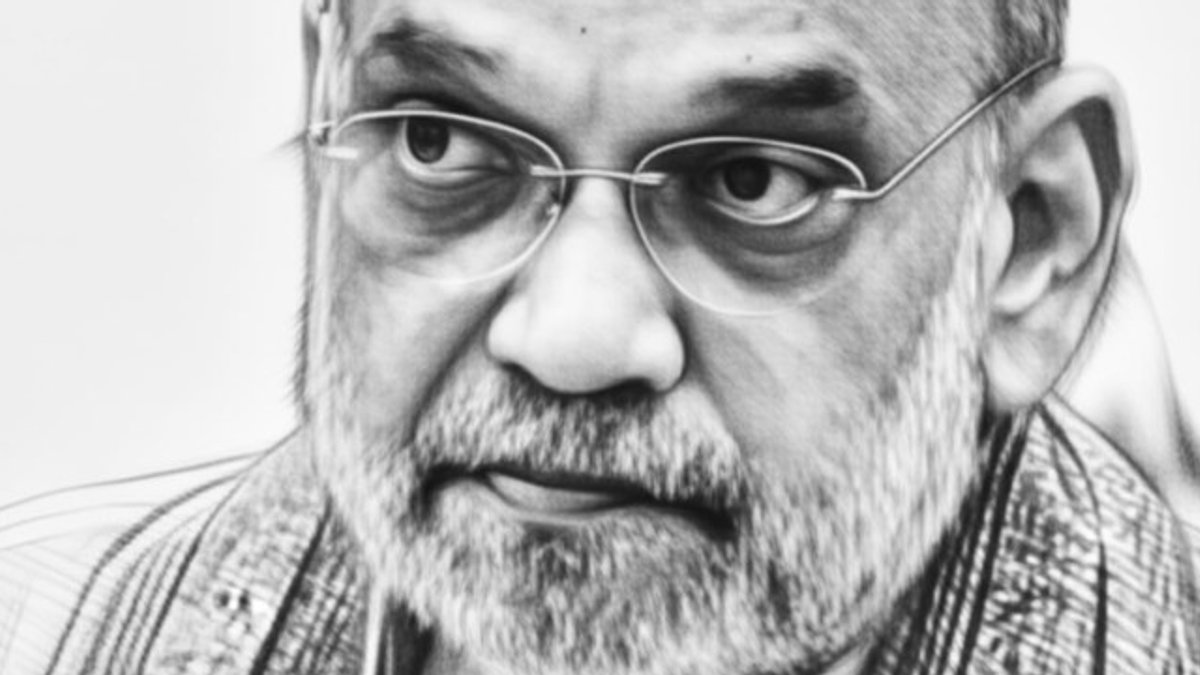
Reporters covering Indian politics often recall a moment of high tension with Amit Shah, the Union Home Minister. In February 2014, Shah walked into Gujarat Bhavan in New Delhi with a clear demand for the press. He cut through pleasantries to ask if the reporter was planning a “puff piece,” warning that such work would be a waste of his time. That early boundary setting established a pattern: Shah approaches journalism with the same intensity he applies to governance, treating interviews as a test of facts and data rather than a platform for performance.
Shah’s political rise is frequently described as a streak of electoral victories, but his method relies on “organisational grammar.” In Gujarat, he built his strategy on a “booth-first” model, using micro-lists and precise messaging that relied on ground-level knowledge rather than broad poll projections. This focus on granular arithmetic allowed the Bharatiya Janata Party to convert thousands of small certainties into one decisive national verdict. By 2019, he had moved from the state to the center as Home Minister, carrying that same preference for closure over debate into national security and federal coordination.
Related: Iqoo Z11 Lite Review: Basics Done Right
During that 2014 conversation, Shah discussed energy policy without using slogans, instead outlining buckets of strategy: reducing crude import dependence, increasing refining capacity, and viewing electronics as a strategic backbone rather than a consumer market. He framed national challenges as supply chain and power center problems, a perspective that has influenced his tenure in North Block. Critics often label this approach hard-edged consolidation, while supporters point to its decisive nature and high signal-to-noise ratio in communication.
One of the most distinct aspects of Shah’s interaction with the media is his willingness to interrogate the interviewer’s premise. When asked if a “strong government” could slide into “strongman politics,” he did not offer a standard defense. Instead, he asked the reporter to define the beneficiary of that strength. This tactical move forces the questioner to articulate the specifics of their argument before he engages with it. It reflects a broader political strategy of defining the battlefield and aligning the party’s message to avoid friendly fire.
There is a noticeable shift in the nature of governance today. In Delhi, Shah manages security and policing with the same rigorous, deadline-driven approach he used in booth management. He treats institutions as tools for execution rather than trophies for debate. This method has led to significant legislative changes and a reconfiguration of center-state relations. The machinery of the state operates with a focus on statute and procedure, aiming for results rather than consensus.
Related: TikTok to Label, Watermark, Scrutinize AI Content
Despite the macro-level strategic focus, Shah maintains a connection to the micro-level details of party organization. He is known to dive into local meetings, micro-coach district teams on turnout mechanics, and recall names from booth lists. This combination of a national chessboard strategist and a hands-on organizer creates a unique political profile. He governs the state like he campaigns, treating complex administrative challenges as systems to be aligned rather than choruses to be persuaded.
Shah’s control extends to the digital sphere as well, where the government monitors content closely. The administration scrutinizes the spread of information to ensure alignment with its strategic goals. This digital oversight mirrors the physical discipline seen in the party’s booth-level operations. The goal is to maintain a coherent narrative that supports the broader political agenda.