
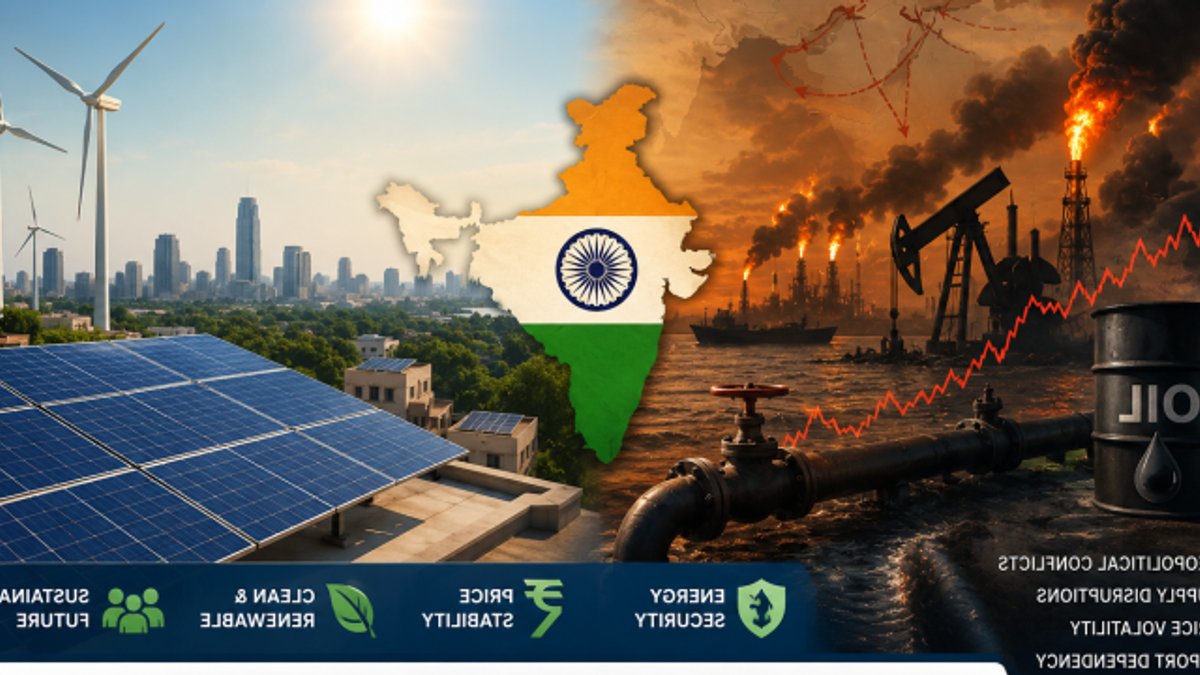
India’s energy development has long been tied to international geopolitical relations, particularly with the Gulf region, which is rich in oil resources. The majority of India’s crude oil needs come from West Asian countries, resulting in supply interruptions, price spikes, and currency fluctuations during conflicts.
The Gulf War and current regional conflicts have shown that oil markets can become unstable in a short time period. As India’s economy grows rapidly, changes in global energy markets directly affect inflation, government finances, and the cost of living.
India relies on foreign sources to provide more than 80% of its crude oil needs, with Saudi Arabia, Iraq, and the United Arab Emirates supplying a significant portion. The partnerships between these countries have remained stable for over 40 years but are still exposed to regional conflicts, interruptions in shipping operations, and worldwide political unrest.
The Indian economy faces rising transportation expenses and manufacturing costs, which increase overall inflation. The world today requires energy security that ensures both resource availability and stable energy costs, as unpredictable events can disrupt energy markets.
Solar power demonstrates itself as India’s most dependable energy resource. Solar energy can serve India as its most essential energy source for future energy needs, offering a clean, domestic source of energy that is both free and abundant.
The country possesses high solar energy potential because its regions experience approximately 300 sunny days annually. The country can implement solar energy solutions at a national scale because solar energy solutions prove both feasible and practical.
Related: US Election Spurs Rise in Bilateral Trade Gains
Solar power systems allow users to maintain stable energy prices. The electricity production cost of a solar facility remains largely unchanged for decades after its construction, with minimal operation and maintenance costs.
This protects India from sudden changes in international energy market prices. Solar power delivers extended price stability, creating a permanent advantage over oil, which depends on worldwide trade and is vulnerable to geopolitical issues and trade policies.
Decentralization is another advantage of solar power. Rooftop solar systems allow households, businesses, and rural communities to generate their own electricity, reducing dependence on central power grids, lowering transmission losses, and improving access in remote areas.
Decentralized systems are also more resilient during emergencies and conflicts. Solar projects can be deployed quickly and expanded easily, giving India the flexibility to meet its growing energy needs.
Solar power generation creates employment opportunities, with the industry creating potential employment for millions through activities such as manufacturing key components like solar panels, solar cells, inverters, and batteries, as well as solar system installation and services.
Backed by Government of India initiatives like ALMM and PLI, India is developing its domestic solar equipment production capacity, which will help the country decrease its dependence on imports for renewable energy products and oil.
Related: Smart digital tips for Nigerian execs on the move
Solar energy provides substantial advantages, yet it faces obstacles, including intermittent power supply, high storage expenses, and insufficient infrastructure. However, the solution to these challenges is being developed.
These are mainly technological and economical challenges that can be addressed through continuous research, innovation, and effective policy support—areas in which the Government of India is actively taking the lead.
Unlike dependence on oil, which is heavily influenced by geopolitical risks and external supply uncertainties, solar energy relies on an abundant and locally available resource. Over time, advancements in technology, improved storage solutions, and increased investment are likely to reduce these limitations significantly.
Energy security is not just an economic concern but a strategic priority for India as it handles an increasingly uncertain global environment.
The transition to solar energy will help India reduce geopolitical risks, stabilize energy costs, and build a more resilient and sustainable future.