
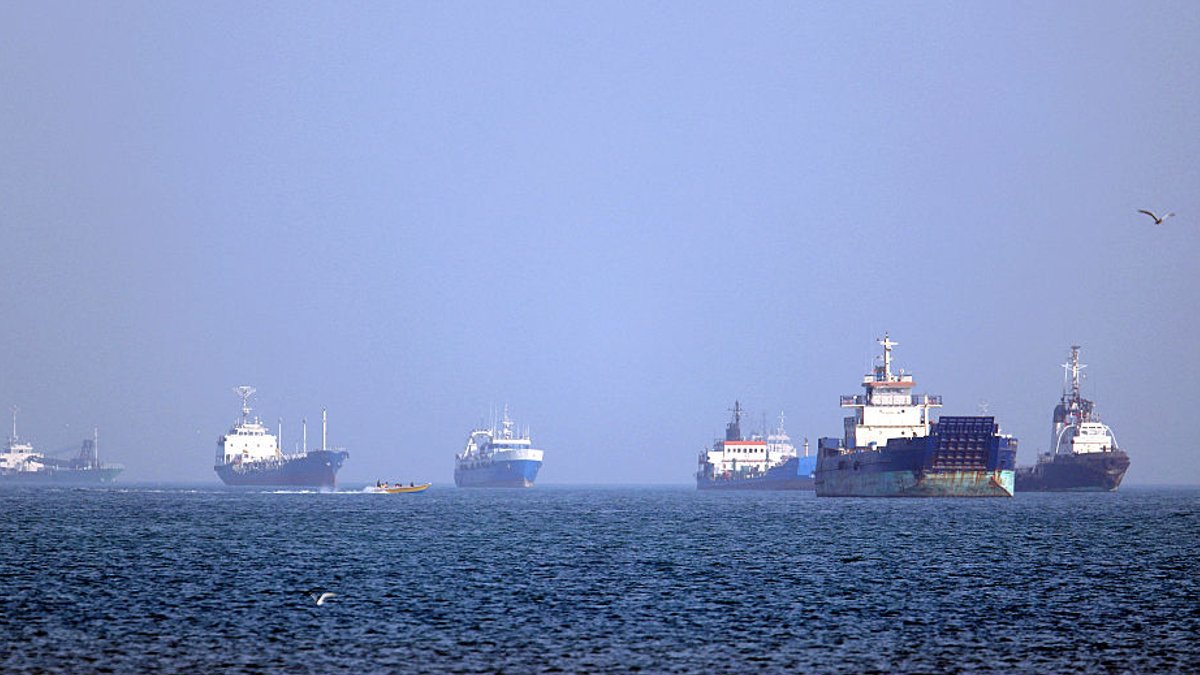
President Donald Trump has rejected an Iranian proposal to reopen the Strait of Hormuz to commercial shipping in exchange for sanctions relief and the end of U.S. naval restrictions. The offer, announced by Iranian Foreign Minister Abbas Araghchi at the United Nations General Assembly on Friday, included a seven-day countdown to reopening the waterway once the U.S. accepted.
Trump dismissed the deal during a Saturday press conference, calling it unacceptable. “They want to make a deal where they open the straight immediately because they’re losing so badly … we are winning tremendously. We have total control of the Hormuz Strait, massive amounts of oil are coming out of the Hormuz Strait”, Trump told reporters on Saturday. “That deal would not be acceptable”, the president continued.
The U.S. has effectively blocked Iranian access to the waterway since hostilities began in late February, though oil shipments still pass through the chokepoint.
Read Also: US Justice Department Challenges EU Fine on X
Araghchi responded in a Telegram post on Saturday, stating Iran had noted Trump’s initial reaction but would await further clarification from mediators before proceeding. He also criticized the U.S. for inconsistent statements, adding that Iran remains open to negotiations but prepared for prolonged conflict. In a Sunday interview with NBC, Araghchi warned that Iran was ready for “a doomsday war” if necessary, though diplomacy remained an option.
The waterway, connecting the Persian Gulf to the Gulf of Oman, is the world’s most critical oil transit route. Before the conflict, it handled about 20% of global oil supply, or roughly 20 million barrels per day. Energy Secretary Chris Wright told Fox News that current daily throughput averages 13 million barrels, though Reuters reported 33.7 million barrels passed through in the week ending September 20—a figure which would amount to less than 7 billion barrels a day.
Global oil prices have surged since the conflict began. Brent crude, the international benchmark, reached levels last seen at the start of the Russia-Ukraine war in February 2022. Prices briefly dipped to $104.5 per barrel on Friday after the Iranian deal proposal emerged.