
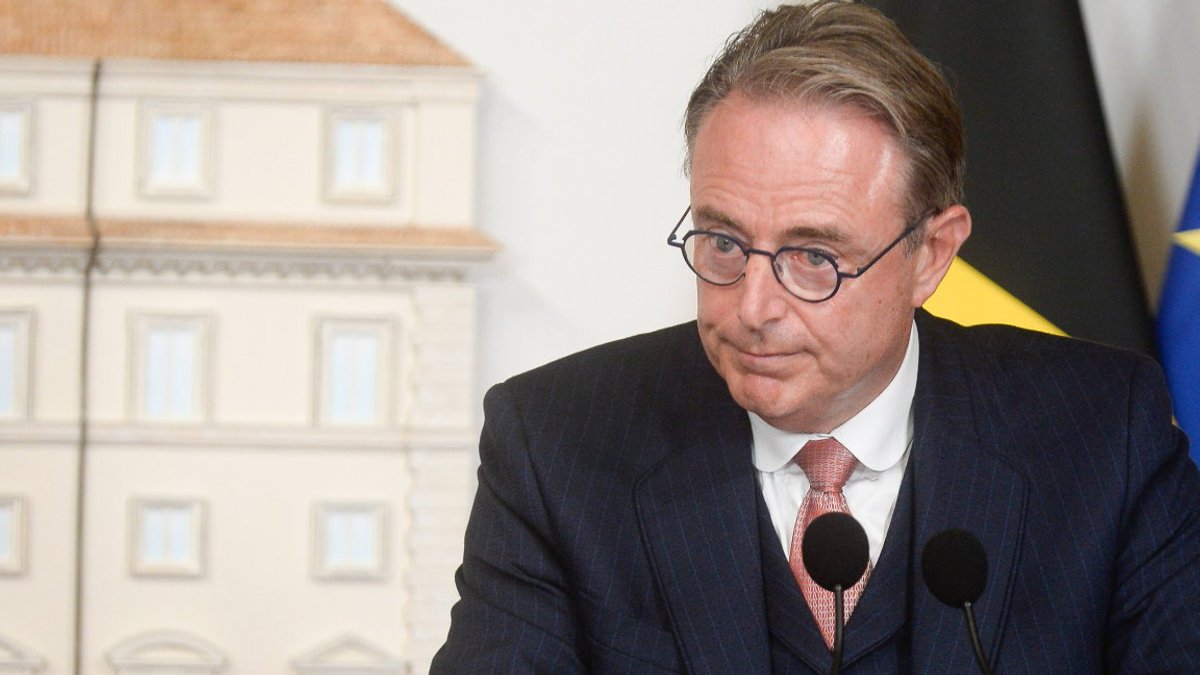
Belgian Prime Minister Bart De Wever has delayed his planned State of the Union address because of a budget dispute within his coalition government. The impasse revolves around proposed value-added tax (VAT) hikes designed to reduce the national deficit by €10 billion by 2029.
De Wever has dismissed the idea of a temporary budget, referred to as the “twelfths” system, which would cap spending at a fraction of last year’s levels. He described this option as unworkable, citing financial market instability and the urgency of Belgium’s fiscal challenges.
The main disagreement involves whether raising VAT aligns with European spending guidelines. De Wever insists the tax increase is essential to generate billions in revenue, but Georges-Louis Bouchez, an MR party lawmaker, rejects the plan. Bouchez argues that higher taxes would hurt economic expansion, aggravate inflation, and reduce disposable income for families.
Coalition tensions have intensified, with Maxime Prévot of the Engagés party accusing Bouchez of obstructing negotiations. Prévot called him a “blocking figure”, though Bouchez defended his stance as resistance to “repeated tax rises”. The Vooruit party, another coalition member, has also opposed De Wever’s measures but has avoided public criticism, letting the MR dispute take center stage.
Read Also: US deploys Reaper drones to South America to fight cartels
This deadlock echoes a crisis from 2023, which required royal intervention to resolve. Observers now warn that De Wever cannot yield to Bouchez without weakening his authority. Some analysts believe Bouchez may be overestimating his influence, potentially deepening political unrest.
Opposition groups have condemned the delay as reckless. Groen and PTB-PVDA criticized the government’s divisions, demanding a budget focused on green investments and wealth-based taxation to protect middle- and working-class households. They pointed to recent demonstrations as proof of public pressure for policy changes.
Without a budget in place, Belgium lacks a clear financial strategy, and no quick solution appears likely. De Wever’s success in reaching an agreement, and preventing another royal intervention, will hinge on convincing his coalition partners to accept tax measures despite economic objections.