
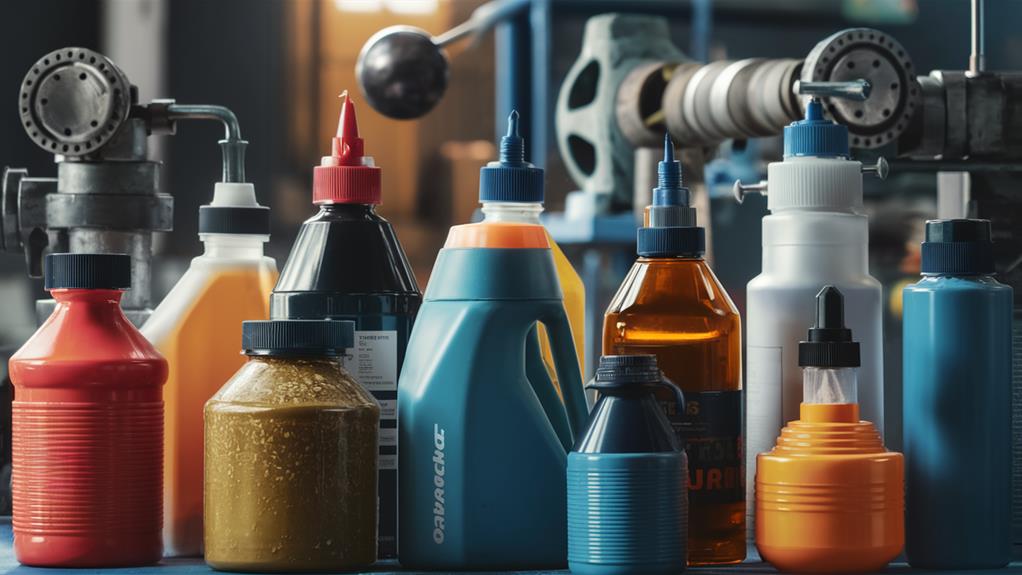
When a fastener refuses to budge, the impulse is often to grab the first can of spray on the shelf and apply as much force as possible. Yet, experience often dictates a more measured approach. Whether you are addressing a rusted bolt on an automotive assembly, a seized hinge in a marine environment, or a corroded fitting on agricultural machinery, the choice of a penetrating oil can significantly alter the outcome. Relying on the wrong product may lead to sheared bolts, stripped threads, or damage to delicate surrounding components, turning a simple maintenance task into a time-consuming extraction project.
Distinguishing Between Lubricants and Penetrants
Understanding the role of these substances is the first step in effective mechanical work. A traditional lubricating oil is generally designed to reduce friction between moving parts, often by maintaining a durable film over a surface to prevent metal-on-metal contact. These products are typically formulated with high viscosity to ensure they stay where they are applied.
In contrast, best penetrating lubricant is designed for a completely different purpose. It possesses low surface tension and low viscosity, which allows it to creep into microscopic gaps between threads and rust-bonded surfaces. Rather than providing long-term lubrication, its primary role is to break the molecular bond between oxidized metal layers. While many modern formulas incorporate both lubricating and penetrating qualities, it is essential to recognize which function is prioritized for your specific situation.
How Penetrating Agents Function Under Stress
The effectiveness of any substance applied to a seized part often depends on its ability to infiltrate and dissolve. Effective agents typically work through three mechanisms:
- Wicking: The chemical makeup allows the liquid to draw itself into tight tolerances via capillary action. This enables the product to reach deep into the root of a rusted bolt or fitting.
- Dissolution: Advanced formulations may contain solvents that chemically weaken the structure of rust and scale, transforming a rigid oxidation layer into a more manageable, granular debris.
- Lubrication: Once the bond is weakened, the residual oils help reduce the mechanical resistance as you attempt to extract the fastener.
Many professionals find that the success of these products depends heavily on time. Forcing a fastener immediately after application rarely achieves the desired result. Allowing the best penetrating lubricant enough time to travel through the threads and migrate into the deepest points of the corrosion is often the most critical variable in the process.
Factors Influencing Your Choice of Product
Selecting the right tool for the job often involves considering the environment and the materials involved. Not every formulation is suitable for every application.
- Environmental Constraints: If you are working on equipment that comes into contact with food processing areas or drinking water lines, you should look for specific formulations that meet safety standards for such environments.
- Material Compatibility: Some high-strength solvents can degrade plastics, rubber seals, or painted surfaces. If the seized component is housed within a complex assembly containing these materials, consider a product noted for its compatibility with rubber and synthetic polymers.
- Extreme Conditions: For equipment exposed to constant high heat or submerged in water, standard penetrating oils may wash away or evaporate too quickly. In these cases, formulations designed to withstand high temperatures or provide a degree of water resistance are typically more effective.
- Residual Effects: If you intend to paint or weld the area after the repair, be aware that some products leave a waxy or oily residue that requires thorough cleaning. Choosing a product that evaporates cleanly can save significant preparation time later.
Aligning Your Maintenance Strategy with Individual Needs
To achieve the best results, evaluate the specific nature of your mechanical challenge before beginning. If the project involves structural steel exposed to the elements for years, the volume and application time are paramount. You might choose to apply a generous amount of penetrating oil and revisit the part periodically over several hours, or even days, to ensure total saturation.
If you are working on a precision assembly, focus on targeted application. Using a product with a straw attachment allows for accuracy, preventing the spray from contaminating adjacent electronic components or sensitive sensors.
Furthermore, consider the physical technique used during extraction. After applying the best penetrating lubricant, gently vibrating the fastener—perhaps by using a controlled tap with a hammer or a brief attempt to tighten the bolt before loosening it—can help the fluid work its way into the threads more thoroughly.
Empowering yourself with the right approach means shifting from a mindset of force to one of calculated mechanical preparation. By understanding the properties of the substances you use and giving them the environment required to perform—namely, time and proper application—you can resolve seized fasteners with greater reliability. Ultimately, the goal is not merely to get the part moving, but to do so in a way that preserves the integrity of the threads and the surrounding assembly for future maintenance.