
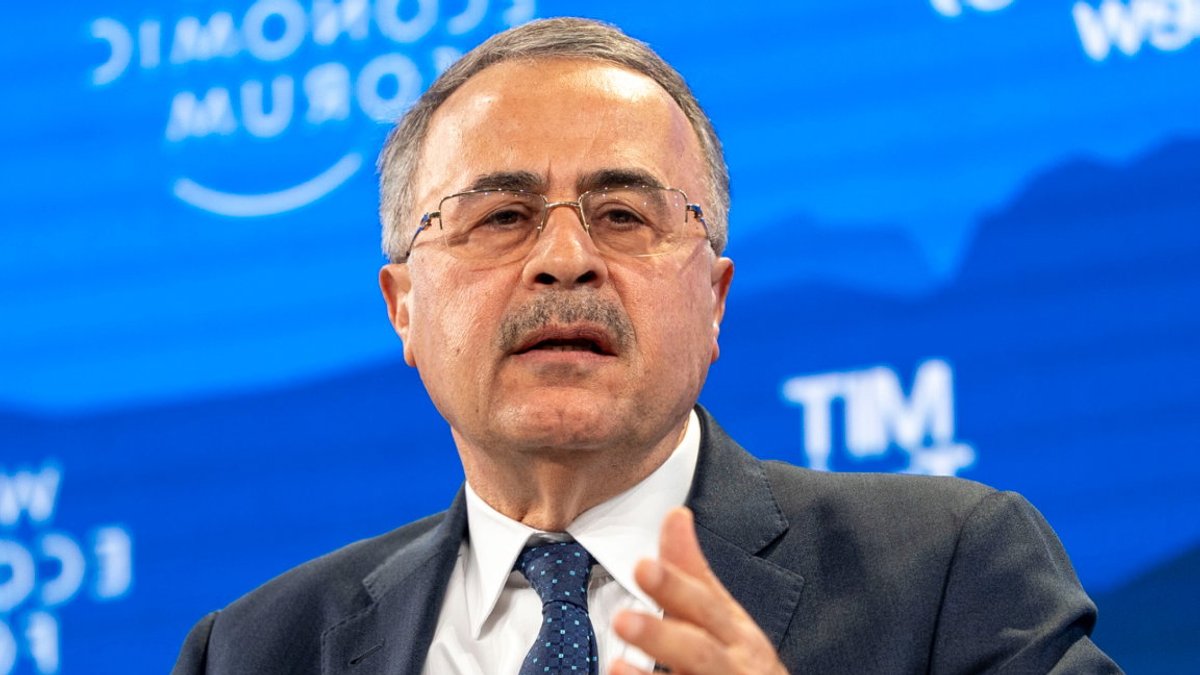
Amin Nasser, the chief executive of Saudi Aramco, warned that worldwide oil reserves have slipped to dangerously low levels, making the market susceptible to sudden supply interruptions. He delivered this assessment while speaking at the Energy Intelligence Forum in London, noting that the turbulence in the Strait of Hormuz is intensifying the situation.
The chief executive stressed that the market’s instability will continue until the Strait of Hormuz is fully reopened and a stable flow of shipments is re-established. Although crude shortages are acute, the surge in refined-fuel prices has been even sharper. Global oil demand stays robust, with analysts estimating a need for roughly two million additional barrels each day over the next two years as nations work to rebuild their depleted stockpiles.
Oil stockpiles have contracted markedly. At the onset of the U.S.–Iran confrontation, about ten billion barrels were available worldwide; that amount has now fallen to under six billion. Technical limitations mean that only around ten percent of the remaining reserves can be drawn quickly.
Read Also: Kennedy Warns GOP on Economy as Polls Favor Dems
Countries around the Gulf are exploring alternate export pathways to sidestep the ongoing disruptions. Major economies have tried to ease fuel-price pressure by releasing up to 100 million barrels of emergency oil, but Nasser said those actions are short-term fixes. They do not solve the deeper mismatch between supply and demand. Kuwait, the UAE and Saudi Arabia have each sent extra tankers from their national fleets to keep exports flowing outside the Hormuz corridor, lessening chokepoint exposure.
Gulf producers have succeeded in raising exports back toward pre-conflict levels, yet security threats in the Red Sea and the Persian Gulf still hamper shipping. Oil prices, which now hover near one hundred dollars a barrel, stay unsettled despite tankers facing risks, including recent attacks that targeted Saudi facilities.