
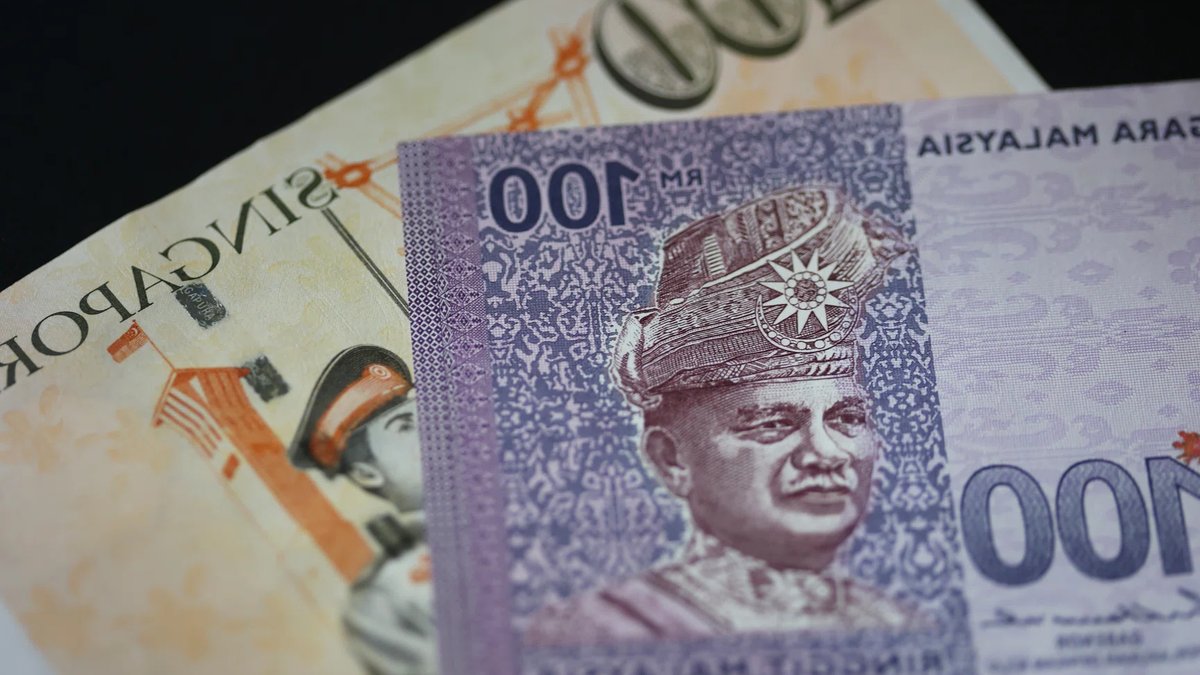
The Singapore dollar rose to a 10-month high against the ringgit on Wednesday (Sep 9), climbing to RM3.2207—the highest level since Oct 31, 2025. This movement reflects broader shifts in regional capital flows, as investors increasingly view Singapore’s currency as a safe haven amid rising U.S. Treasury yields and a broader risk-off environment. The divergence shows contrasting near-term drivers for the neighboring economies, with Singapore’s exchange-rate framework acting as a buffer against global market stress while Malaysia’s ringgit faces persistent capital outflows despite stable economic fundamentals.
The two currencies now show starkly different trajectories. Singapore’s Monetary Authority maintains an exchange-rate framework that manages the Singdollar against a basket of key trading partners—including the U.S. dollar, euro, yen, and yuan—to insulate it from global volatility. The framework allows for gradual, targeted interventions rather than abrupt shifts. Meanwhile, Malaysia’s ringgit continues to face outflows despite stable economic fundamentals, according to market observers, as foreign investors reassess exposure to emerging-market assets in favor of higher-yielding developed markets.
Singapore’s currency holds firm amid regional pressures
The Singdollar’s strength stems from its exchange-rate framework, which allows authorities to fine-tune its value against major currencies. Analysts point to additional support from the yen’s recent gains, which have tightened correlations between the Singdollar and other Asian currencies, as well as positive sentiment toward Singapore’s equity markets. Saktiandi Supaat, head of foreign exchange research at Maybank, described the Singdollar as an outlier in ASEAN, where most currencies are experiencing capital outflows, noting that its stability is partly due to the Monetary Authority’s ability to adjust the currency’s effective exchange rate without triggering speculative attacks.
Yuxuan Tang from JP Morgan shared similar concerns about regional vulnerabilities but predicted the Singdollar would remain resilient. She cited the Monetary Authority’s tightening stance—including tighter domestic liquidity and rising short-term rates, as key stabilizing factors, alongside persistent capital inflows driven by Singapore’s status as a financial hub. The currency’s managed nature also allows it to absorb external shocks more effectively than freely floating currencies in the region. DBS strategists added that domestic liquidity tightening and rising short-term rates, now closely aligned with raised global bond yields, would continue pushing the Singdollar higher.
“There is a limit to how low Singdollar rates can trade relative to US dollar rates,” DBS analysts noted, indicating upward pressure on short-term rates as global central banks maintain a tighter monetary stance.
By contrast, Malaysia’s ringgit has weakened due to a broader sell-off in regional foreign exchange markets. Rising U.S. Treasury yields, higher crude oil prices, and softer performance in Malaysian government bonds have contributed to the decline. Christopher Wong, an FX strategist at OCBC, attributed the outflows to market adjustments rather than underlying economic weaknesses, noting that Malaysia’s current account surplus and foreign exchange reserves remain robust.
Malaysia’s currency faces short-term strain, but underlying strength remains
Foreign investors withdrew $122 million from Malaysian stocks in early September, following an earlier outflow of $486 million in August, according to financial data. The exodus has accelerated as global funds reduce exposure to emerging-market equities in favor of safer assets, particularly in light of escalating geopolitical risks. Foreign ownership in Malaysian equities has fallen to 18.3% in the second quarter, per Citi’s calculations, reflecting a broader trend of reduced foreign participation in the region’s capital markets. Despite these short-term pressures, currency strategists view the ringgit’s slide as temporary, noting that the country’s economic growth, investment pipeline, and external sector are holding up. Malaysia is also positioned to benefit from artificial intelligence-driven growth and steady electronics exports.
Bank Negara Malaysia maintained its overnight policy rate at 2.75% for the seventh consecutive meeting in September, signaling a pause in tightening while closely monitoring inflation trends. DBS analysts highlighted a subtle shift in the central bank’s latest statement, which omitted the phrase that the current rate was “appropriate”, a move intended to preserve flexibility for future adjustments.
Philip Wee, a senior currency economist at DBS, recalled past ringgit rallies, including the rebound following Malaysia’s hosting of the ASEAN Summit in late 2025. However, he warned that political uncertainties, particularly voter concerns over rising living costs and setbacks for the Unity government, could continue to weigh on the currency. The government’s fiscal responses have raised concerns about the pace of longer-term institutional and fiscal reforms. If the Federal Reserve implements further rate hikes, the ringgit may weaken further against the Singdollar, especially as crude oil prices have climbed back above $100 per barrel, increasing import costs and inflationary pressures.
Some investors still anticipate long-term declines in the U.S. dollar, which could benefit the Singdollar as a haven. However, Supaat from Maybank remains optimistic about the ringgit’s prospects over time, advising traders to take advantage of dollar rallies by selling the U.S. currency and purchasing the ringgit instead. He noted that while near-term pressure on the ringgit could persist if global yields remain raised, Malaysia’s strong external position, including substantial foreign exchange reserves and a current account surplus, provides a solid foundation for recovery.