
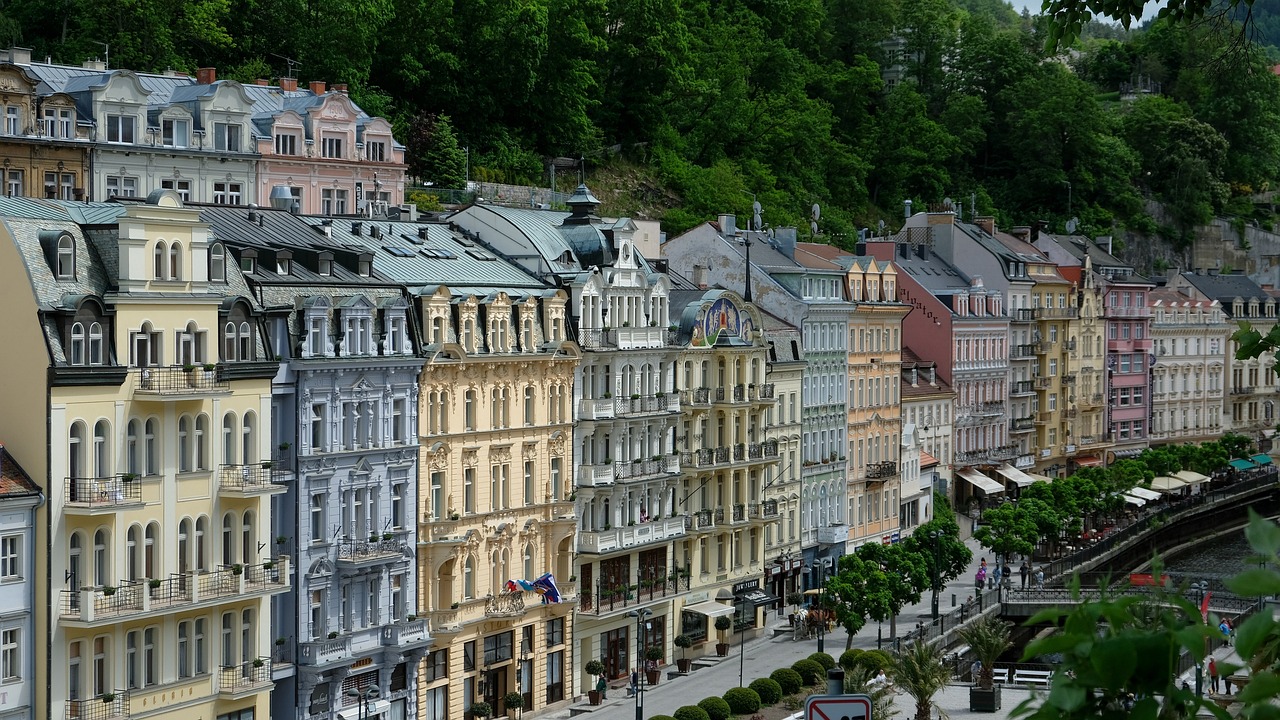
Karlovy Vary International Film Festival begins its 60th edition this week, drawing Hollywood veterans and European talent to the Czech spa town for a week of screenings, awards and public events.
Legendary actors join the celebration
Among the marquee names on the red carpet are Dustin Hoffman, Maggie Gyllenhaal, Jesse Eisenberg, Juliette Binoche and Harvey Keitel. Several of them will receive the Crystal Globe for outstanding contributions to world cinema, a tradition that highlights the event’s reputation as a bridge between East‑European film culture and global stardom.
The program features 12 titles in the main competition, another 12 in the Proxima section, and an equal number of special screenings. In total, up to 200 films—ranging from feature‑length narratives to documentaries—will be shown across the city’s historic venues.
Related: Google must pay 1.7 billion euros fine
Founded in 1946, it is the second‑oldest festival of its kind after Venice. Its 80th anniversary coincides with the 60th edition because the event was forced to alternate with Moscow from 1959 to 1993, a relic of its status as the sole Category A festival for the former Eastern Bloc.
Surviving the communist era, the 1968 occupation and the “normalization” period of the 1970s and 1980s, the festival faced a near‑shutdown after the Velvet Revolution. Competition from the short‑lived Golden Golem festival in Prague added pressure, but a revival effort led by actor Jiří Bartoška and film scholar Eva Zaoralová in 1994 restored its standing.
“A big city dilutes the festival,” Bartoška told a documentary by Milan Kuchynka and Jurásek. “We have to frame it.” His view that Karlovy Vary’s intimate setting—described by a visitor as a “gathering of Art Nouveau cakes”—offers a distinct atmosphere compared with larger capitals still guides the event’s identity.
Financially, it runs on a budget of about €10 million (roughly 250 million Czech crowns). Roughly 70 percent comes from private sponsors, while the Czech government contributes about 20 percent and the city of Karlovy Vary adds another 10 percent. This funding mix contrasts with many Western festivals that rely more heavily on public money.
Related: Fed Holds Rates Steady Hints at 2024 Hike
Attendance numbers illustrate the reach. Last year, nearly 10,000 accredited visitors, over 1,000 professionals and more than 500 journalists attended.
In addition to the star‑studded ceremonies, artistic director Karel Och and production director Petr Lintimer oversee the selection process, ensuring a balance of emerging voices and established auteurs. The Proxima competition highlights innovative storytelling, while the main competition showcases seasoned filmmakers.
A retrospective of Robert Richardson’s cinematography offers a visual study of his work from the 1970s to recent blockbusters.
Local businesses benefit from the influx of visitors. Hotels, cafés and souvenir shops report a surge in demand, and the city’s famed spa facilities see increased bookings. The event’s timing—mid‑June to early July—coincides with the region’s peak tourist season, amplifying its economic impact.
Related: AI Boom May Spark Next Market Crash
Organizers acknowledge challenges. Weather can affect outdoor screenings, and the reliance on private sponsorship means the festival must continuously court corporate partners. Yet, the commitment of volunteers and the enduring enthusiasm of the town’s residents keep the tradition alive.
For those interested in the history, a concise overview is available on Wikipedia. The site details past laureates, program evolution and the festival’s role in shaping post‑communist cinema.
The Karlovy Vary International Film Festival runs through 11 July, offering a blend of star power, cinematic discovery and a uniquely Czech ambience that continues to attract film lovers from around the globe.