
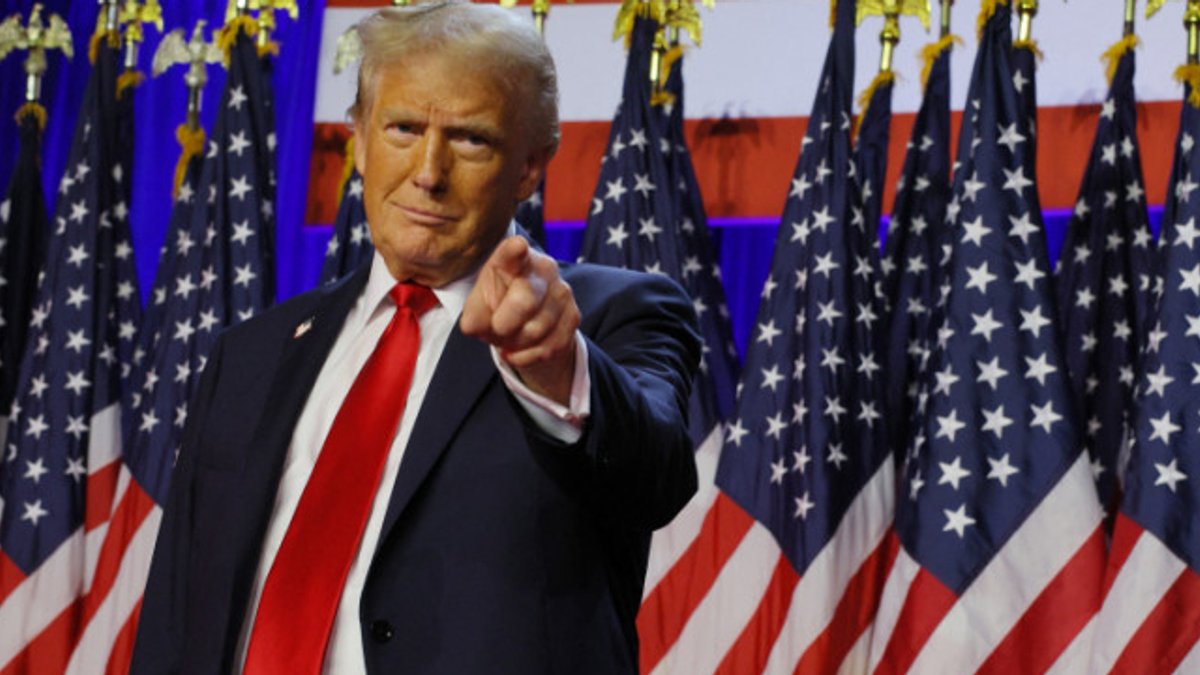
The global stock market rally triggered by Donald Trump’s election win has a complicated future. While benchmark indices around the world gained between 1.5 and 3 percent following his victory, the path ahead is clouded by potential policy shifts. The prospect of aggressive tariff implementation and fiscal expansion suggests that the current market enthusiasm might face significant headwinds.
Trump has promised to deliver a statutory tariff rate of 60 percent against imports from China and broader 10 percent tariffs on other countries within weeks of taking charge in January 2025. These measures could spark economic growth but also widen the fiscal deficit and reignite inflation. The bond markets are already reacting to this possibility, with the US benchmark 10-year bond yield spiking up by more than 3 percent on November 6 as Trump delivered his victory speech in Florida.
This financial tightening means interest rates in the US have gone up by nearly 1 percent, leaving the Federal Reserve with a tight leash to walk. The 10-year bond yield in the US witnessed its biggest monthly spike in October since September 2022. Such a rapid rise in borrowing costs complicates the economic outlook and alters the calculus for monetary policy.
Related: Kolkata construction revival nears as 60% projects clear
The immediate impact of these trade policies is likely to be felt in the form of higher consumer prices. A global tariff war could see a significant boost to inflation. This inflationary pressure is expected to limit the scope for the Federal Reserve to cut interest rates. While Trump has shown a consistent preference for easy monetary policy, the incoming administration’s focus on tariffs suggests a more cautious approach from the central bank.
According to a Nomura client survey report, negative impact on the federal funds rate from a second Trump presidency is expected by the end of 2025. The report notes that combative trade policy would likely weigh on economic activity, which is dovish. However, it suggests that it would take some time for the Fed to assess inflationary shocks stemming from higher tariffs before resuming rate cuts.
With Republicans having swept the polls and control over Congress, the path for implementing new tariffs appears open. President Trump would have the legal authority to impose many tariffs without congressional approval, although prior trade agreements like the USMCA may curtail some of this discretionary power. Trade analysts are building up a base case scenario of an average effective tariff rate ramp up to around 11-12 percent in 2026. This represents a substantial increase from the current effective tariff rate of 2.5-3 percent by the US. The eventual cooling of this rate through bilateral deals could bring it back down to 7-8 percent, but the transition period will likely be volatile.
Related: US Election Spurs Rise in Bilateral Trade Gains
The Federal Reserve’s Dilemma
For the average consumer and business owner, the primary concern is the cost of borrowing and the stability of prices. The shift from an era of potential rate cuts to one of potential rate hikes creates a difficult environment for planning. Businesses that rely on international supply chains may face higher input costs, which are frequently passed on to the end consumer. This dynamic creates a feedback loop that can make inflation more persistent than central banks typically prefer.
Analysts are also skeptical about Trump’s ability to significantly dictate Fed policy in a direct manner. Trump originally appointed Fed Chair Powell in 2018, but he has since indicated that he would not reappoint him. Chair Powell’s current term runs until May 2026, and Supreme Court precedent suggests Trump would be unable to fire Powell without cause. In 2020, the Senate (with a Republican majority) refused to confirm Judy Shelton, an unorthodox appointee to the Board of Governors. Similarly, anticipated Senate resistance also led Trump to withdraw the nomination of Stephen Moore to the Fed. While Trump’s preferences are for a dovish stance, the structural limitations of the Senate and the judiciary may temper his influence over the Federal Reserve.