
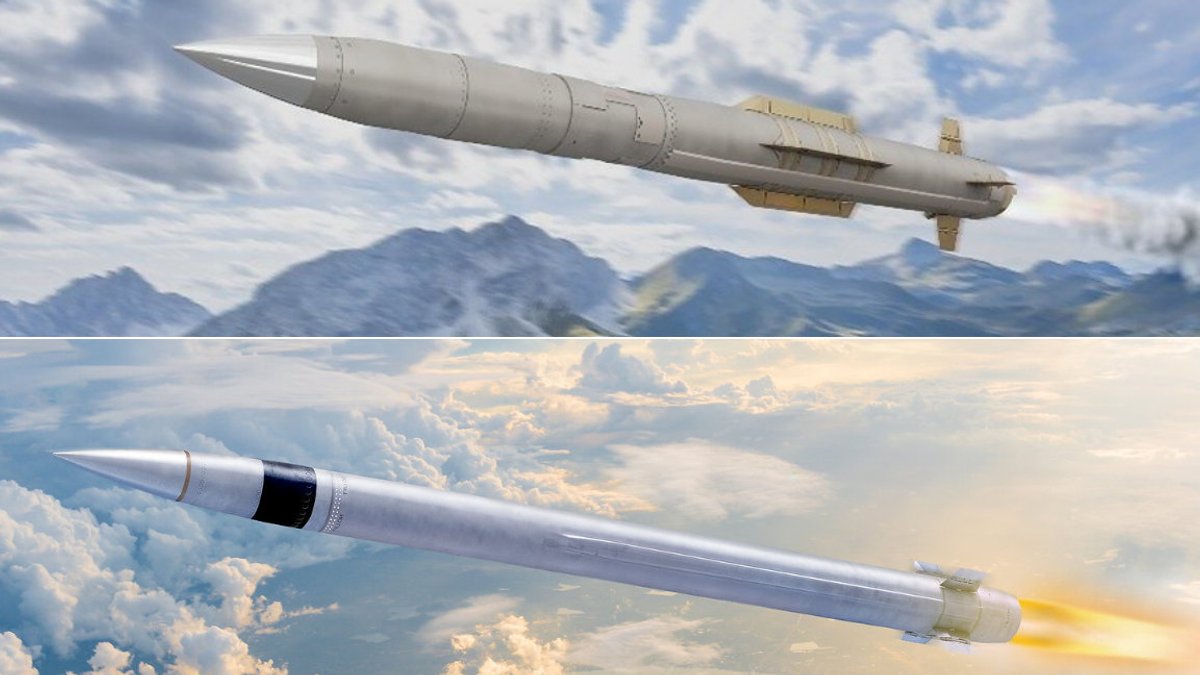
Lockheed Martin has developed the PAC-3 ACE, a low-cost alternative that uses fragmentation warheads. The PAC-3 Edge targets hypersonic weapons with multispectral detection and advanced maneuvering capabilities. These two strategies allow for affordable defense and high-level threat interception.
The PAC-3 ACE is designed to be a cost-effective option, with a projected cost more than half that of the PAC-3 MSE. To achieve these savings, Lockheed Martin replaces expensive MSE components with basic parts.
Specifically, the costly attitude control motors (ACM) used for precise guidance are removed, and the dual-pulse rocket motor is replaced with a single-pulse version. Instead of relying on direct kinetic impact, the ACE uses a fragmentation warhead to neutralize targets.
Although it remains compatible with the Integrated Battle Command System (IBCS) and uses standard PAC-3 guidance, some experts fear its capabilities may be equivalent to, or even inferior to, those of the older PAC-2 GEM-T, particularly in terms of ballistic missile defense.
Jason Reynolds, a senior executive at Lockheed Martin, highlighted the significant international interest in the ACE and suggested that any potential missile production in Ukraine would likely use this low-cost version or a similar model.
The PAC-3 Edge, on the other hand, is being developed to intercept hypersonic weapons. This variant features a constant-diameter, streamlined body without the mid-body aero fins found on the MSE. To increase the chances of hitting the target and evading decoys, the Edge uses a modular guidance system capable of multispectral or bispectral detection.
In collaboration with Northrop Grumman, Lockheed Martin is also developing a three-pulse rocket motor to optimize energy consumption and potentially increase the missile’s range. Additionally, the Edge will be equipped with an improved ACM system offering superior maneuvering precision to that of the MSE.
While not officially confirmed, this interceptor may be intended to function in conjunction with the THAAD system. The development of these two PAC-3 variants reflects Lockheed Martin’s efforts to provide affordable and effective defense solutions against a range of threats.
Lockheed Martin’s development of the PAC-3 ACE and PAC-3 Edge demonstrates the company’s commitment to creating defense systems that can effectively counter emerging threats. They are working to provide solutions that are both affordable and capable of intercepting a variety of threats, including hypersonic weapons.