
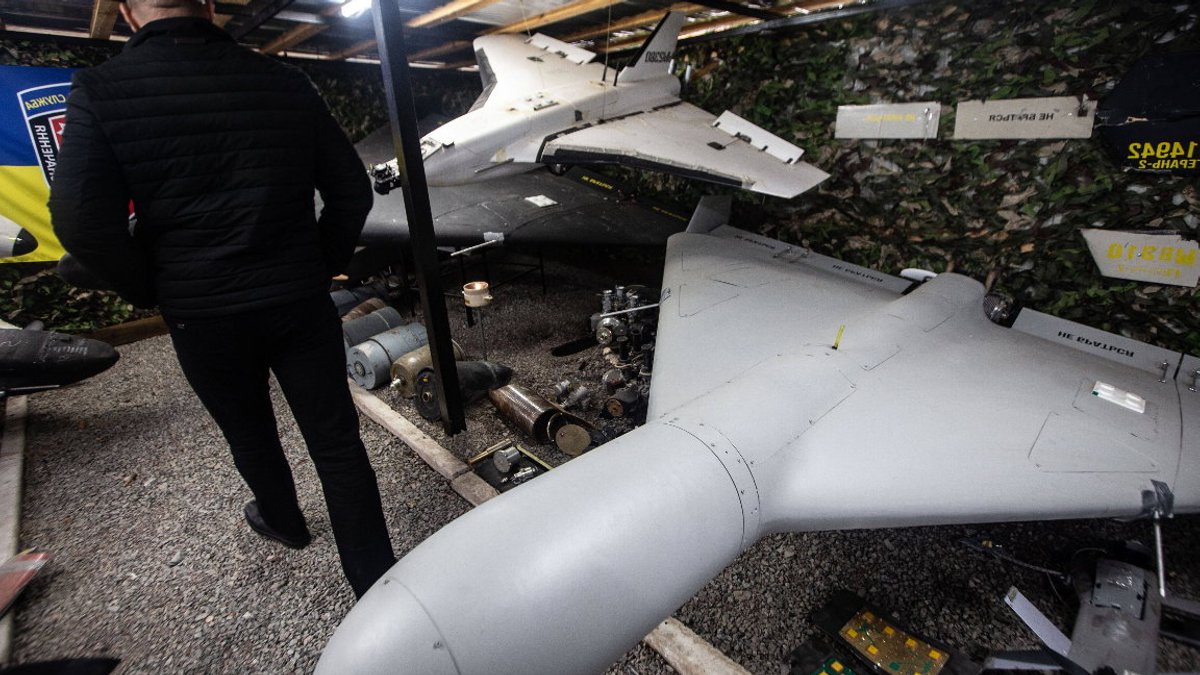
Russia has introduced its fastest drones to date, the Geran-5, in coordinated attacks alongside slower Geran-2 models to overwhelm Ukrainian air defenses. These new drones, equipped with jet engines, reach speeds of 800 km/h—a pace that surpasses current Ukrainian interceptors, which already face difficulties countering the slower Geran-4 models traveling at 500 km/h. Their low production costs and missile-like design create a significant tactical threat.
The October 16 attack demonstrated this strategy in action, deploying both drone types in a two-stage operation. The slower Geran-2 drones served as a distraction, drawing defensive fire and depleting Ukrainian resources. Once air defenses were stretched thin, the faster Geran-5 models exploited the gaps, penetrating deeper into Ukrainian territory. The tactic forced Ukrainian forces to allocate defenses across 29 locations, including key areas such as Kiev and the contested Donetsk region.
The Geran-5 differs from conventional missiles in appearance but shares their destructive potential while maintaining much lower production costs. This affordability enables Russia to deploy them in large numbers, overwhelming Ukraine’s ability to track and intercept them. The combination of high speed and volume presents a challenge for defense systems not originally designed to handle such rapid, coordinated drone swarms.
Read Also: France Unveils Super Rafale Amid Defense Strategy Shift
Ukrainian military leaders have identified the Geran-5’s speed as a critical factor in recent strikes. Earlier drone models, including the Geran-4, already strained Ukrainian defenses to their limits. The new variant’s 800 km/h capability now requires interceptors to engage earlier or risk being outmaneuvered. This shift highlights a broader evolution in drone warfare, where affordable, high-speed systems are altering how battles are fought.
Russia’s approach of using mixed drone swarms, deploying slower drones first to deplete defenses before introducing faster models, echoes tactics observed in past conflicts. However, the Geran-5 introduces an additional challenge by merging drone and missile characteristics while keeping production expenses low. This makes it harder for Ukraine to develop effective countermeasures.
Military experts have repeatedly cautioned that the spread of drone technology could weaken the effectiveness of traditional air defense systems. The Geran-5 serves as a clear example of how quickly advancing drone capabilities can surpass existing countermeasures, compelling both sides to adjust their strategies and equipment.