
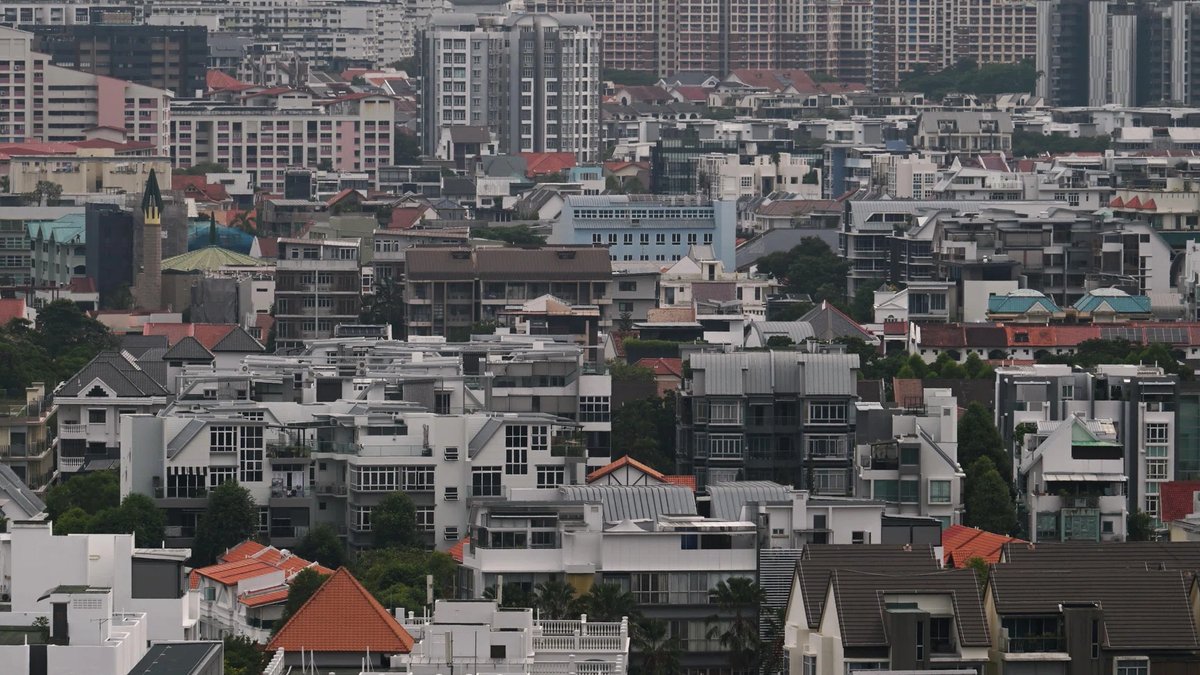
Singapore’s residential market has shifted from rapid growth to a more measured pace in 2026, as buyers adopt a stricter approach to purchases. The supply of new developments has tightened significantly, forcing potential homeowners to evaluate projects based on pricing and quality rather than relying on past demand trends.
Sales of private homes declined by 11.6% in the first seven months of 2026, totaling 4,885 units, compared to the same period the previous year. The number of units launched fell more sharply, dropping 28.7% to 4,516 units, according to Urban Redevelopment Authority data. Despite the reduced supply, sales still exceeded launches by 8.2%, reversing the pattern from 2025, when developers introduced more units than buyers purchased, resulting in a 12.7% surplus.
Industry observers attribute this slowdown to a return to basic market principles. After two years of aggressive project introductions, buyers now have a broader range of options to consider. “Developers are no longer selling into a rising tide in which every launch benefits equally. Every project now has to earn demand,” said Marcus Chu, CEO of ERA Singapore.
The current sales-to-launch ratio stands at 1.08 for the first seven months of 2026, slightly above the five-year average of 1.05. However, sales performance at recent launches has weakened. Projects launched in July recorded an average take-up rate of below 55%, compared with 63.9% for those launched in May. While these rates remain “healthy by historical standards,” they were noticeably lower than levels typically observed over the past few years, when new launches frequently achieved take-up rates of more than 70% on their opening weekend.
Location and pricing have emerged as the key differentiators. A project launched in April at an average price of S$2,120 per square foot (psf) sold 99% of its units. In contrast, another development priced slightly higher at S$2,180 psf in January moved only 25%. The successful project benefited from a relatively affordable entry price, its first-mover advantage as the area’s first private condominium, and direct access to an upcoming MRT station and retail component. The less successful launch, located in a more established neighborhood with limited transit convenience, offered less of a “transformation story.”
Fourth-quarter launches test buyer appetite
The final quarter of 2026 will provide a critical test for buyer demand. Thomson Reserve, a 1,268-unit development by CapitaLand Development, UOL Group, and SingLand, is scheduled to launch in October. This project is part of 2,300 new private homes expected to enter the market by year’s end, excluding executive condominiums. Other notable upcoming launches include:
- Amberwood at Holland (Sim Lian, 212 units, previews begin September 11)
- Lucerne Grand at Lakeside Drive (City Developments Ltd, 570 units, Jurong)
- The Serra Residences (Far East Organization, 133 freehold units, Novena)
Strong sales figures at recent projects indicate that demand persists, though buyers now prioritize value over speed. In the second quarter of 2026, 62% of private home transactions involved resales, up from 52% in the third quarter of 2025. Some purchasers are turning to the secondary market for better pricing. Meanwhile, higher-end properties—those exceeding S$2 million—now account for 61% of new non-landed sales, compared to 53.9% in the previous year.
A clear price threshold has formed at S$2.5 million. Homes priced below this level constituted 41% to 74% of monthly sales between January and August, according to URA Realis data. Developers will need to justify premium pricing with compelling features—such as prime locations, transit access, or long-term investment potential—to maintain buyer interest.
Analysts predict slower but stable growth
Projections for 2026 vary among analysts. PropNex anticipates 9,000 new private home sales, while ERA Singapore forecasts 8,000 to 9,000. CBRE’s estimate is more conservative, ranging from 7,500 to 8,500 units, with price growth expected between 2% and 4%, assuming no significant disruptions. The previous year saw a 67% surge in sales, reaching 10,815 units, but the current market trend suggests 2026 will not replicate that pace.
Buyers are not withdrawing from the market, they are making more deliberate choices. The focus now is whether fourth-quarter launches can maintain momentum or if the sector has settled into a new balance. With fewer competing projects, only those with distinct advantages will succeed in capturing buyer attention.
Developers must prove project value
Developers must demonstrate that their offerings address current buyer needs rather than simply adding to the supply pipeline. Factors like location, cost efficiency, and long-term value will determine which projects gain traction, and which face challenges, in a market that no longer guarantees automatic demand.
Government policies may also play a role. Rising childcare subsidies could reduce household spending pressure, potentially altering buying behavior. Meanwhile, shifting buyer demographics, such as younger professionals seeking luxury homes, could reshape demand patterns in unexpected ways.