
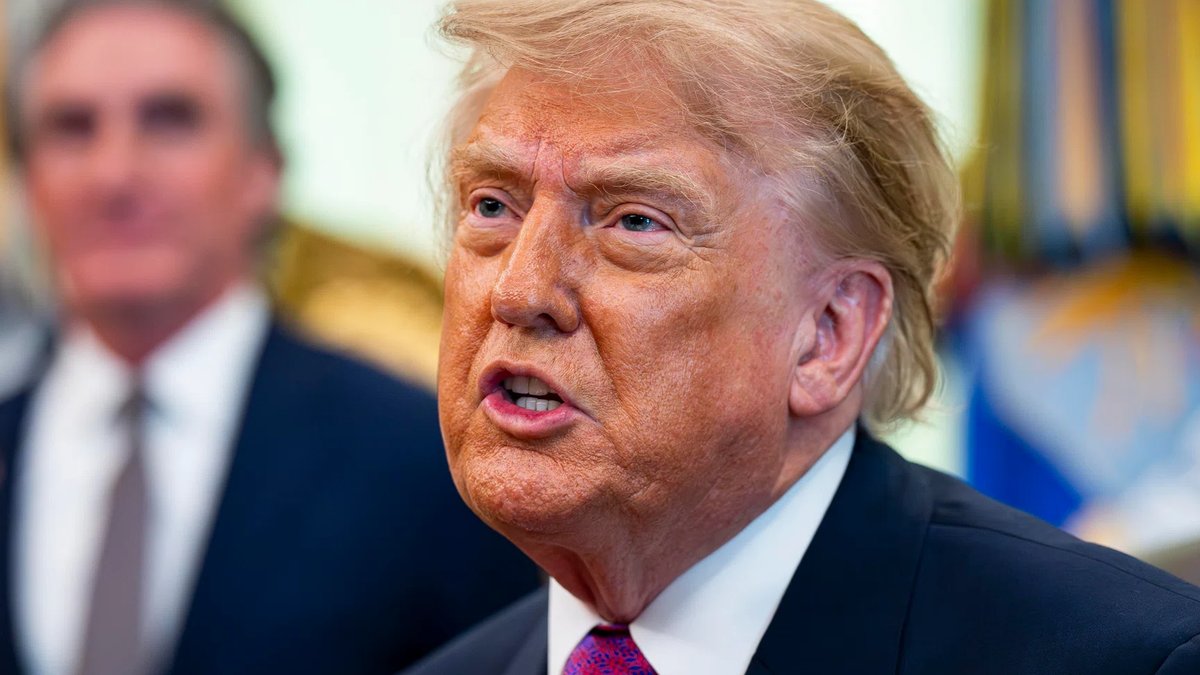
President Donald Trump announced on Friday (Aug 28) that the United States has secured majority control of more than 65 billion barrels of proven oil reserves in Venezuela. The announcement represents a dramatic expansion of US involvement in the South American nation’s energy sector.
Trump provided limited specifics about the arrangement, stating that majority US control was achieved through a partnership with private business. The president said the agreement was directed by him and executed by Secretary of State Marco Rubio and Secretary of War Pete Hegseth in collaboration with Venezuelan interim President Delcy Rodriguez.
A deal with few details
The deal gives American companies long-term access to Venezuelan oilfields while guaranteeing a supply of crude to the United States. Officials from both nations are preparing to sign agreements next week that will grant exploration and production rights to a number of companies, with a focus on US firms.
Related: Japan tightens rules on long-term mortgages
Rubio described the arrangement as a win for both countries. He stated on X that it would secure stable, low-cost oil for the United States and help lower petrol prices. The secretary also claimed the deal would bring nearly $100 billion in private investment, support thousands of high-paying jobs, and help rebuild Venezuela’s economy.
Infrastructure and legal questions
Venezuela holds the world’s largest proven oil reserves but produces only about 1.25 million barrels per day. This output is far below the country’s potential after years of underinvestment and mismanagement.
David Goldwyn, president of Goldwyn Global Strategies, questioned the legal basis of the agreement. He noted that it is unclear whether a US government lease would have a legal foundation under Venezuela’s constitution and new hydrocarbons law. Goldwyn pointed out there is no precedent for the US government entering into a lease to operate oil fields.
Goldwyn also questioned whether the plan would address the obstacles that have deterred investment in Venezuela for years. He cited political uncertainty, an inadequate power grid, limited export capacity, and government discretion over the industry as factors that make it difficult to see how this kind of arrangement would accelerate investment at any material scale.
Related: How India’s Industrial Operations Are Surging in 2025
Analysts said they needed to see more details on the agreement’s legal and financial structure before assessing whether it could attract significant investment. Prospects were also unclear for the deal to lower petrol prices in the short term, as developing the infrastructure needed to produce, transport and refine Venezuela’s heavy crude could take years.
While the US captured and removed former President Nicolas Maduro from power in January, Washington has been trying to secure a stable flow of Venezuelan crude for US refineries. The Trump administration is under pressure ahead of midterm elections in November to address rising petrol prices. The administration has also been looking for solutions to replenish its Strategic Petroleum Reserve, the oil stockpile.
The Venezuelan state retains control over core oil industry activities. The government nationalised the oil industry in the 1970s, putting state-run PDVSA at its center. Under former President Hugo Chavez, control tightened, forcing foreign producers into state-led joint ventures and later expropriating assets. Under Maduro, years of underinvestment, mismanagement, political turmoil and US sanctions drove Venezuela’s production sharply lower.