
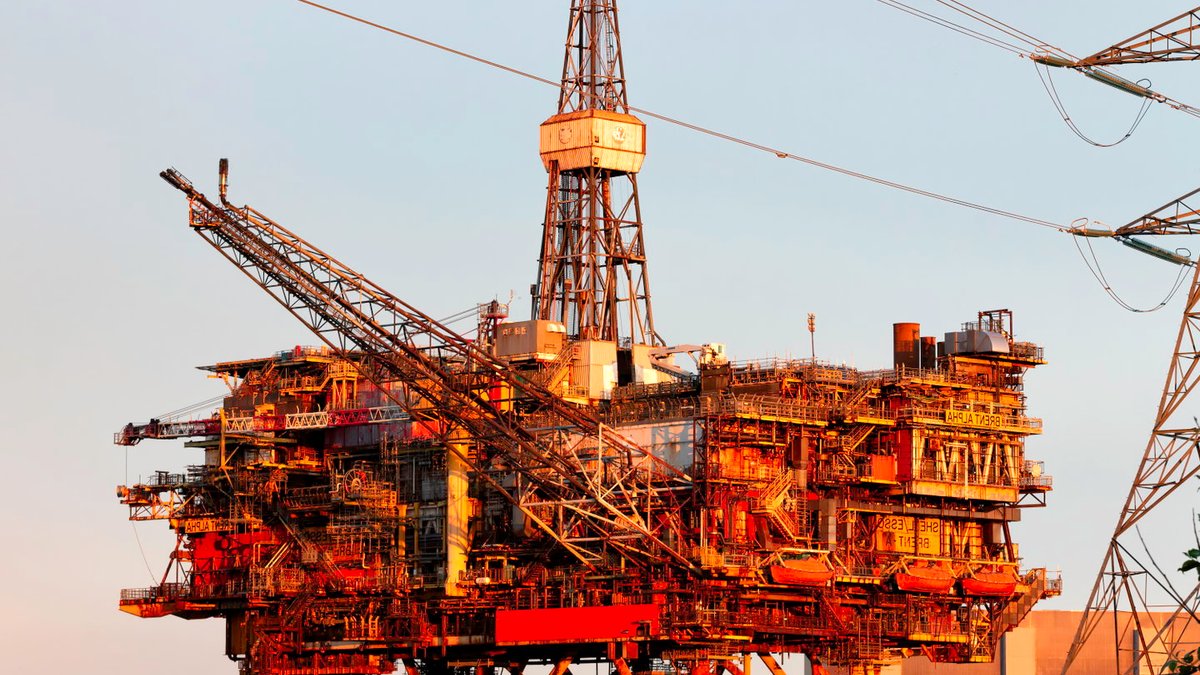
Oil prices climbed further on Wednesday due to rising concerns over supply constraints, with geopolitical risks and storm threats pushing markets higher. The Brent crude benchmark exceeded $100 for the second consecutive day, peaking at $101.16 per barrel, while U.S. WTI reached $89.79. The increase stems from two key factors: a developing hurricane in the Gulf of Mexico and heightened tensions in the Middle East.
At 09:49 GMT, the Brent contract was quoted at $101.16 per barrel, confirming its position above the $100 threshold, while WTI settled at $89.79.
A storm system in the Gulf threatens 15% of U.S. oil production and 5% of its natural gas output. The affected area processes nearly half of the nation’s daily refining capacity. Meteorologists indicate this could become the first hurricane of 2026, adding to existing supply pressures already tightening global markets.
Separately, Middle East instability continues to escalate. Iranian-backed Houthi rebels targeted Saudi airports in Najran and Jazan last week, even as coalition forces made advances in southern Yemen. Market observers at ING highlight that persistent maritime attacks and unresolved diplomatic disputes, including U.S.-Iran relations, are keeping traders cautious. Former U.S. President Donald Trump’s recent criticism of Iran’s involvement in the Israel-Hamas conflict suggests no immediate reduction in regional tensions.
Read Also: Keeping Your Gaming Experience Smooth: Common Console Problems and Professional Repair Solutions
Vitol reported that large volumes of refined products and crude have recently departed the region aboard tankers, showing the flow of supply despite the geopolitical backdrop.
Some supply easing has appeared. Saudi Arabia’s East-West pipeline is now running at near-full capacity, handling 5.8 million barrels per day, while traders report significant crude and refined product shipments leaving the kingdom. However, U.S. crude inventories dropped by 2.09 million barrels last week, reinforcing signs of global stock shortages.
Refinery disruptions and ongoing geopolitical risks are likely to sustain raised premiums for refined products, keeping crude prices near $100 unless diplomatic progress emerges. The market’s behavior indicates traders are anticipating extended disruptions rather than brief price surges.