
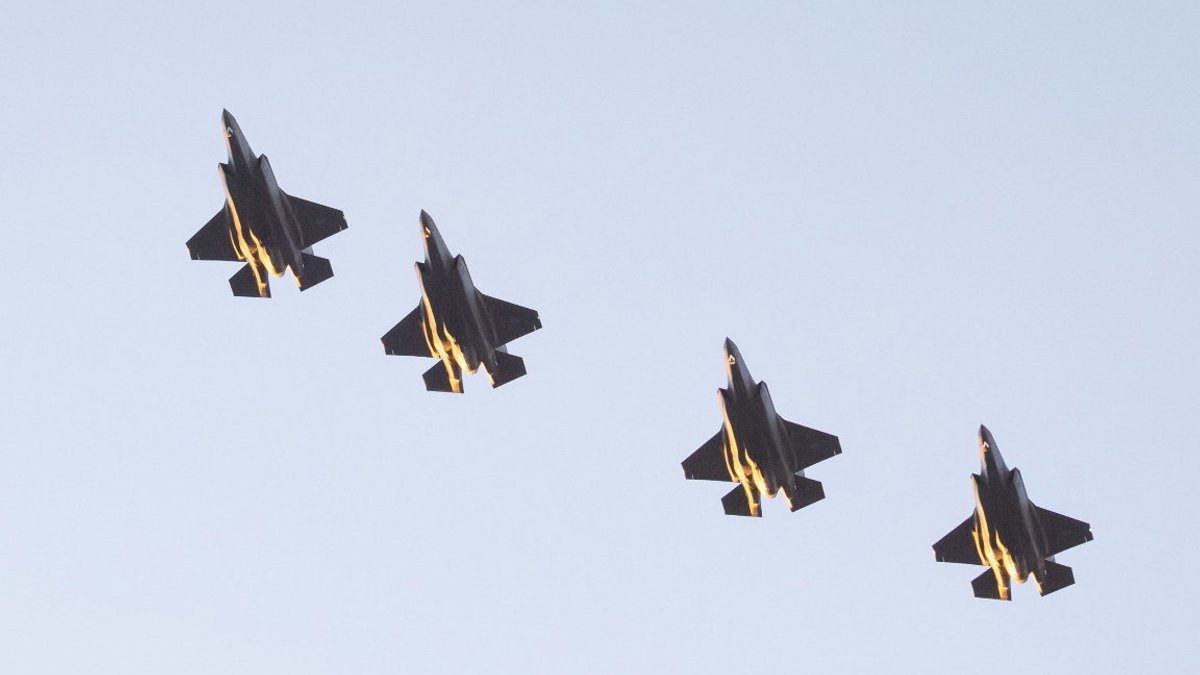
During the recent Zhuhai airshow, China displayed a variety of radar systems, including passive arrays, over-the-horizon units and metric-wave networks, all promoted as capable of spotting stealth aircraft such as the F-35.
Low-frequency radars and stealth geometry
Stealth design relies on shaping surfaces to scatter short-wavelength X-band radar pulses, which are typical of fighter-track radars. The sharp edges and facets redirect energy away from the transmitter, reducing the return signal.
When longer wavelengths, often measured in meters, illuminate the same airframe, the aircraft behaves more like a solid metal block. Engineers in both East and West have long recognized that metric-wave radars can obtain a measurable echo from a stealth platform.
The main drawback of these low-frequency sensors is angular resolution. Antenna size must be comparable to the wavelength to achieve the narrow beam needed for precise targeting, and such large structures are impractical for mobile deployment.
Consequently, a metric-wave radar can alert operators that a low-observable aircraft is within a broad sector, but it cannot produce the fine-grained track required for missile guidance.
Data fusion to close the detection gap
Chinese defense planners propose linking low-frequency detectors with high-frequency fire-control radars. The former would cue the latter toward a restricted search area, allowing the latter’s tighter beam to acquire the target.
Read Also: U.S. Military Faces F-22 Raptor Shortage Amid Evolving Threats
Official statements from the Chinese Academy of Aerospace Studies claim the necessary communication infrastructure exists, yet independent assessments have not verified whether the data exchange can occur quickly enough under combat stress.
Academic work from Beihang University highlights the “exposure time” problem: stealth aircraft only appear intermittently on long-wave radars during specific maneuvers, making continuous tracking difficult for automated filters.
In practice, the sensor network creates a systemic mismatch: one element can sense without engaging, while another can engage without sensing. The overall effectiveness depends on how seamlessly the two functions are married.
Unlike earlier generations of radar, the current Chinese approach emphasizes a dense, overlapping coverage grid. This mirrors past attempts to mitigate stealth, but the technical hurdle of turning a fleeting detection into a reliable fire solution remains unresolved.
Operational doubts and independent observations
Many performance figures cited in vendor brochures assume ideal conditions, such as clear weather and minimal electronic interference. Press releases often repeat these numbers without critical scrutiny.