
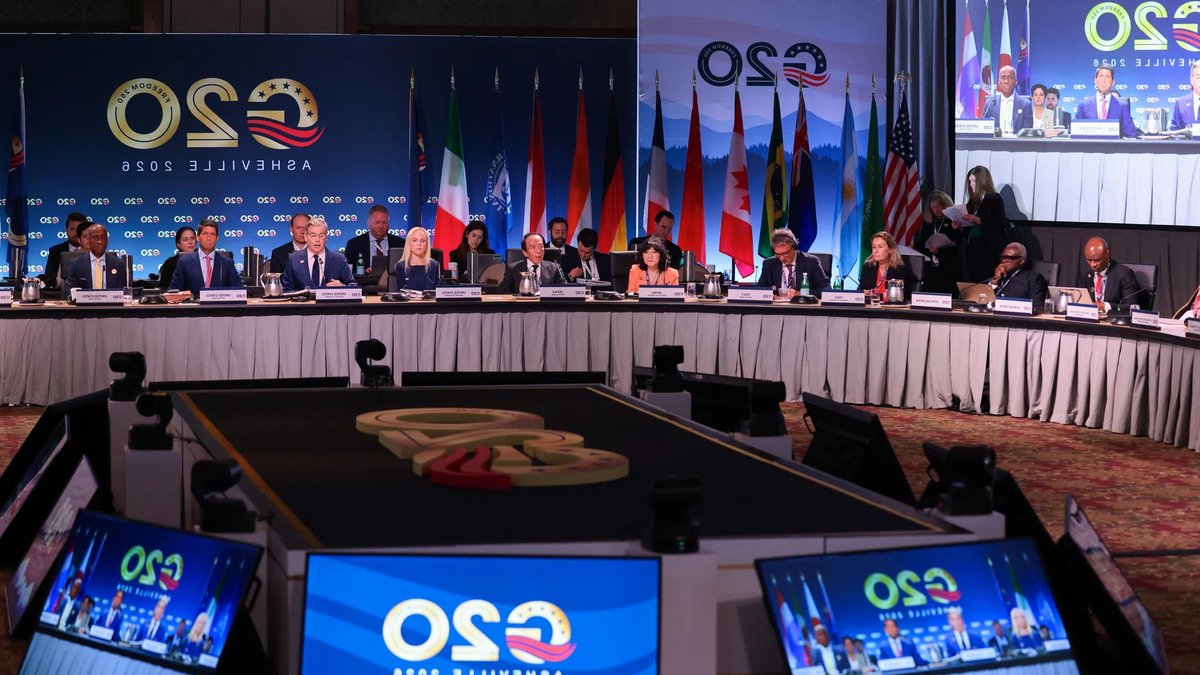
The Group of 20 (G20) financial leaders, except China, have agreed to take action against policies that cause over-reliance on exports and hinder growth elsewhere. This decision was made at a meeting in Asheville, North Carolina, on Tuesday, with US Treasury Secretary Scott Bessent playing a key role in the discussions.
The finance ministers’ meeting focused on China’s massive export push, which has pressured economies across the globe, especially with the US imposing high tariffs on Chinese goods. China’s total exports rose 23.9 per cent in July year on year, prompting growing calls in Europe for tougher curbs on Chinese imports.
A G20 chair’s statement said the participants, except China’s, agreed that countries should eliminate policies that exacerbate imbalances. The statement emphasized that countries with excessive and persistent external surpluses should remove distortions that constrain domestic consumption and result in an over-reliance on exports for growth.
European Economy Commissioner Valdis Dombrovskis said China is a major source of economic imbalances, but also noted that the US and Europe have roles to play in evening things out. German Finance Minister Lars Klingbeil commented that uncertainty, including the US- and Israeli-led Iran war and ongoing US tariff disputes, is holding back the global economy.
A sell-off in global bond markets deepened on Tuesday, with concerns about energy-driven inflation, potential monetary tightening, and worsening fiscal conditions.
Countries with significant trade deficits, such as the US, impose tariffs on goods from countries like China, leading to a complex web of retaliatory measures and trade restrictions. This can have far-reaching consequences for global economic growth and stability.
The G20 meeting saw differences in tone between the US hosts and some European participants, with European countries and Canada expressing dismay that Russia attended the meeting for the first time since it invaded Ukraine in 2022.
International Monetary Fund managing director Kristalina Georgieva told reporters that she believes China recognizes it needs to take action, but is calling for coordinated action with others, such as the US reducing its growing fiscal deficits, which contribute to excessive import demand, affecting funding for various projects.
Beijing has leveraged its dominance in the processing of critical minerals by placing export restrictions on rare earths in April 2025, a response to US President Donald Trump’s tariffs that has also affected non-US companies. Japanese Finance Minister Satsuki Katayama said she had told her G20 counterparts that arbitrary export restrictions on critical minerals were harming the global economy.
The G20 chair’s statement included a call for countries to avoid unnecessary export restrictions to ensure global supply chains continue to function normally. As the global economy faces complex trade tensions and economic imbalances, it remains to be seen how the G20 countries will work together to address these challenges, and how this will impact the market in the long run.